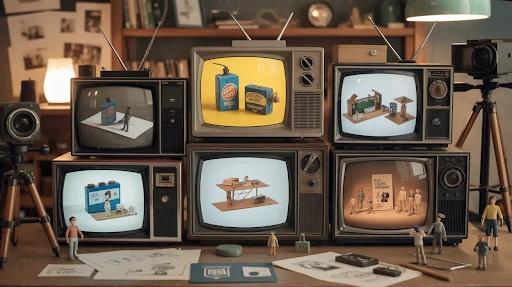
Good stop motion ideas do not need a giant set or a huge production budget. Sometimes, a bottle moving across a table, a folded paper bird, or a few pieces of fruit sliding into place can do more than a glossy video with too much polish. That is the charm of stop motion. It feels handled. You can sense the work behind it.
For brands, that matters. A lot of video now looks clean, smooth, and almost too perfect. Stop motion has a different pull. It slows the viewer down for a second. It makes ordinary things feel like they have a little life in them.
Why Stop Motion Ideas Still Work for Brands
Stop motion is simple to understand. Move an object a little. Take a frame. Move it again. Take another frame. Play the frames together, and the object looks alive.
Simple, yes. Quick, no.
That slow process is part of why it has so much character. A tiny jump in movement or a small shadow shift can make the video feel handmade in a good way.
When an explainer video production company employs stop motion effectively, the aim is more than just creating something attractive. The movement should make the message seem clearer, warmer, or more memorable.
Here are ten useful directions brands can take.
1. Everyday Object Stop Motion
Everyday object stop motion is probably the easiest place to start.
You take items people already know, like bottles, boxes, fabric, tools, stationery, or product packaging, and let them carry the story. A plastic bottle can become a thread. A messy desk can clean itself up. A product kit can be assembled piece by piece.
This style is good for sustainability stories, retail products, office tools, packaging videos, and simple product explainers. It works because the viewer does not need to learn the visual language. They already know the objects. The video just gives those objects a job.
2. Food Stop Motion
Food stop motion has a built-in advantage: texture.
Fruit, herbs, spices, sauces, candies, cereals, and beverages add color and movement before the animation begins. This approach allows a business to communicate about freshness, ingredients, flavor, or natural advantages without going into too much detail.
A lime wedge sliding into place or herbs gathering around a bottle can say “fresh” faster than a paragraph can.
This can work well for food, wellness, beauty, cleaning, and supplement brands. If the message needs a little extra clarity, a 2D explainer video company can add simple labels or graphic callouts while keeping the handmade feel intact.
3. Origami Stop Motion
Origami stop motion feels quieter than most styles, which can be its strength.
A flat sheet folds into a crane, a flower, a house, or some other symbol. The movement feels careful. Personal. Almost delicate. That makes it a good fit for education, healthcare, accessibility, nonprofits, and tech campaigns with a human story underneath.
Origami also gives you a natural visual metaphor. Something flat becomes something shaped. A problem unfolds. A solution takes form. It is not loud, but it can stay with people.
4. Hybrid Stop Motion
Pure stop motion can be charming, but sometimes a business message needs more structure.
That is where hybrid stop motion helps. You might have paper pieces moving on a table, while animated text, icons, or interface graphics appear around them. The physical pieces keep the video warm. The digital layer keeps the explanation clear.
This works nicely for B2B brands, financial services, software, and process-heavy topics. A SaaS explainer video company could use this style to make a workflow feel less like another cold screen recording.
The trick is not to overdo the digital parts. If the graphics take over, the stop motion loses the thing that made it interesting in the first place.
5. Paper Cut-Out Animation
Paper cut-out animation has a really useful middle ground. It feels crafted, but it can still be clean and organized.
Paper can become people, maps, timelines, machines, buildings, products, or little scenes. You can tell a brand history, show how a product evolved, or explain a process without needing real footage from every moment.
The texture matters here. Edges, shadows, folds, and layers give the video a physical quality. It feels designed, but not sterile. That is a nice space for brands that want something creative without going too artsy.
6. Whiteboard Stop Motion
Whiteboard stop motion is not fancy. That is kind of the point.
A hand, a marker, and a board can explain a process very clearly. This style is useful for finance, training, onboarding, education, internal communication, and service explanations.
The slight jumpiness between frames can make the lesson feel more human. It feels like someone is building the idea in front of you rather than handing you a finished slide.
Use this when clarity matters more than visual drama. It is not the format for every brand story, but for step-by-step explanation, it can do the job well.
7. Puppet Stop Motion
Puppet stop motion works when the video needs character.
A felt figure, clay character, toy model, or handmade puppet can carry emotion with the smallest movement. A head turn. A pause. A hand gesture. Those little things make the scene feel alive.
This style is great for customer service topics, children’s brands, healthcare, small business stories, training clips, and light humor. Puppets let you talk about human situations without making the video feel too serious or too corporate.
There is also something naturally watchable about physical characters. They have texture. They cast real shadows. They feel present.
8. Painted Stop Motion
Painted stop motion is one of the more expressive options.
Instead of moving an object across the frame, the image itself changes. Paint appears. Lines grow. Color spreads. A scene slowly builds or breaks apart.
This style is suitable for cultural advertising, art-driven companies, premium items, emotive storytelling, and creative studio work. It is not the quickest path, but it gives a video an appearance that is difficult to replicate.
The viewer is not only seeing the final image. They are seeing it happen. That visible making process is the whole appeal.
9. 2D Stop Motion
2D stop motion is good when the message needs structure but the brand still wants something with a handmade rhythm.
Flat cards, icons, charts, cutout people, labels, packaging, and simple product pieces can move frame by frame. The final result can feel organized without looking like a normal presentation.
This style works for service explainers, customer journeys, product benefits, and business processes. It is especially useful when you want the clarity of flat visuals but do not want the video to feel too smooth or generic.
10. 3D Stop Motion
3D stop motion is the better option when depth matters.
Mini sets, wooden figures, product models, clay objects, and sculpted props can make a brand story feel more physical. If the product has shape, weight, texture, or movement, this style gives the viewer something more concrete to look at.
A 3D explainer video company can take inspiration from this approach when a product needs dimensional detail but should not feel cold or overly digital.
This is a strong fit for physical products, family-focused campaigns, toys, devices, equipment, and product worlds that need a tactile feel.
Frequently Asked Questions
[dynamic_faq]
Final Words
The best stop motion ideas make a brand video feel more physical and more memorable. Everyday objects can show transformation. Food can show freshness. Origami can carry emotion. Paper cutouts can tell a brand story.
Whiteboard scenes can simplify a process. Puppets, painted images, 2D layouts, and 3D models each provide their distinct texture. The best option is determined by what the viewer needs to learn and the emotional impact the company wishes to leave.
Related Articles: